Low Back Pain and Sacral Return in Pre-Meiji Japan: "Planar Body Manipulation" and the Wisdom of Avoiding Turns
 shotarokimijima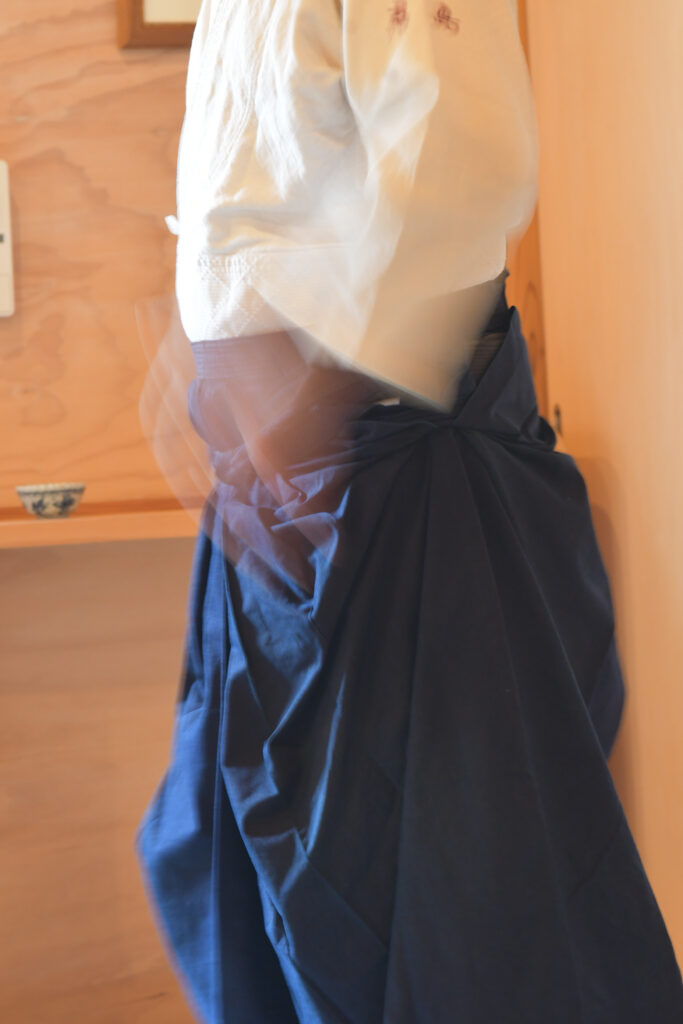
Back pain - it is a national disease of the modern world.
However, there was certainly a time in Japan when the concept of "back pain" itself was not as common as it is today.
If we look at the physical manipulation and wisdom of the Japanese people before the Meiji period, we will find many hints in them that modern people should learn from.
Back pain before the Meiji era: Was "back pain" a rarity?
Before the Meiji era, the modern understanding of "chronic back pain" hardly existed in Japan.
Although "back pain" was mentioned in old medical and health care books on rare occasions,
it was mainly spoken of as being caused by the elderly or by strenuous farm work.
It is thought that far fewer people suffered from daily chronic back pain than today.
Behind this was the wisdom of lifestyle and body usage, especially in the "plane manipulation" of the body.
What is "areal body manipulation" - a uniquely Japanese way of movement?
The traditional way of moving in mainland Japan is characterized by full-body operation with an awareness of the "plane".
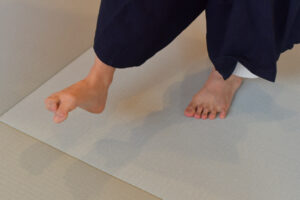
- Slip-feet, walking on nanba, sitting on seiza, living on tatami mats and slippers
- Use the whole body as a "plane" through the axis without twisting the torso.
- Avoid local twisting (turning) and excessive force
Such a way of movement was a rational wisdom to distribute the local load to specific areas such as the lumbar spine and to balance the
body as a whole.
Sacroiliac return - the principle of "flow" from the pelvis
In martial arts and kobujutsu, the body manipulation called "sacral return" has been emphasized.
- By "returning" the sacrum to its proper position and the pelvis to its proper position,
the curve of the entire spine is aligned and power "flows" smoothly throughout the body. - This movement is the foundation for using the whole body as a
"plane" without rounding or forcing the hips to bow.
Sacral returns stabilize the pelvis, activate the inner muscles, restore balance to the center of gravity, and eliminate localized tension and "blockages.
This is the "wisdom" of preventing chronic back pain.
Avoiding turning - waist protected by "no twisting
Before the western style "turning movements" became common in lifestyle and sports education after the Meiji era,
Japanese avoided twisting the trunk in daily movements, martial arts, and performing arts as much as possible.
- Instead of "rotating" the lumbar vertebrae, the lumbar vertebrae are received in a "plane" centered on the sacrum and distributed to the entire body.
- The trunk axis is not blurred and can move in a stable manner.
This "swivel-avoidance" wisdom greatly reduced the burden on the lumbar spine and may have been one of the reasons for the low
back pain.
Hints for the Modern Age: "Sacral Return" and the Rediscovery of the "Mask
If you are suffering from back pain or posture problems, you may find
some unexpected hints by returning to the traditional body sensation of using the whole body in the "plane" and the wisdom of returning the sacral bone.
Instead of twisting the lumbar spine, the sacrum is erected and the force is channeled from the pelvis to the whole body as a plane.
Now is the time to incorporate this old and new body manipulation into your daily life and work.
We do not deny the modern turning movements, and we want to explore the "essential use of the body" by utilizing the advantages of both tradition and modernity.
This is the view of the body that BUSHIN-DEREKI™ aims for.